
Driveways
Block paving driveways in Southport
New block paving drives, laid on a proper dug out and compacted base, with the edging set in concrete and the drainage sorted. Herringbone, borders and permeable blocks. We take the old drive away and can do the dropped kerb too.
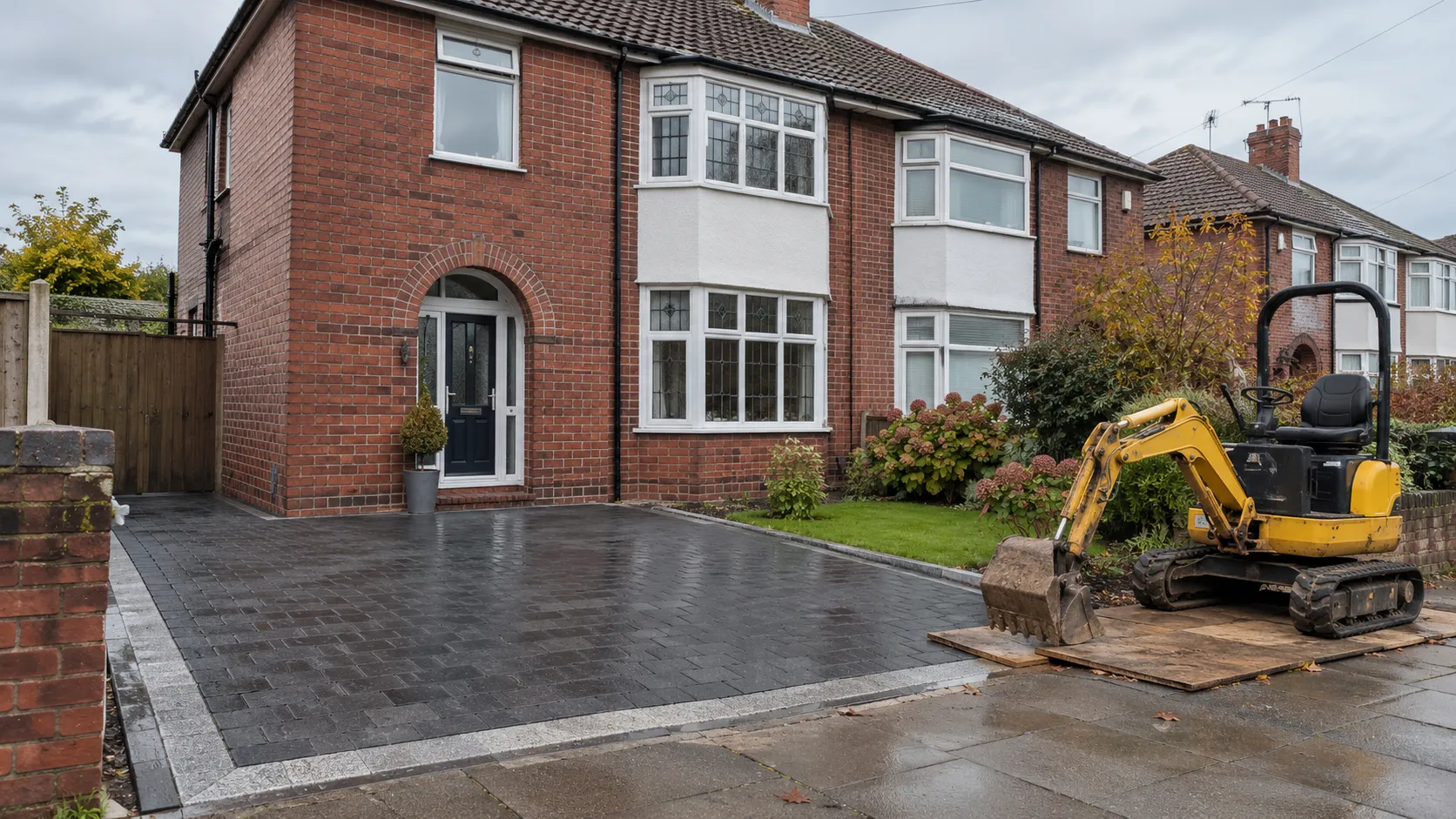
Why block paving?
It is the most popular drive in the UK for good reason. There is a huge choice of colours and patterns, it takes the weight of cars, and if one block cracks or a pipe needs digging up, the blocks can be lifted and put back.
It does need a bit of care. The joints need topping up with sand now and then, and the base underneath has to be right, or it will dip where the car parks.
Standard or permeable?
Standard block paving sheds rain off the surface, so it needs falls and somewhere for the water to go, like a channel drain or a lawn.
Permeable block paving has wider joints filled with grit, so rain soaks down through the drive into a deeper stone base. It usually means no planning permission is needed, and no puddles.
Patterns
Herringbone
Blocks laid in a zig zag at 45 or 90 degrees. They lock into each other, so it is the strongest pattern for a drive that cars turn on.
Basket weave
Pairs of blocks laid at right angles, like a woven basket. A traditional look, better for paths and patios than busy drives.
Stretcher bond
Rows of blocks with the joints staggered, like brickwork. Clean and simple, good for narrow drives and borders.
Borders and bands
A contrasting row of blocks around the edge or across the drive to frame it. Charcoal around a brindle drive is a popular one.
How we lay a block paving drive
Eight steps. The first five are underneath, and they are the ones that decide how long the drive lasts.
- 1
Look and measure
We check the levels, the ground, the access and where the rain will go, then give you a written quote.
- 2
Dig out
The old drive or garden comes out, down to firm ground, and goes away on our grab lorries.
- 3
Membrane and sub-base
A membrane goes down, then Type 1 sub-base compacted in layers. This is what stops a drive sinking.
- 4
Edging
Kerbs or edging blocks are set in concrete so the paving cannot creep outwards.
- 5
Drainage
Channel drains, gullies or a soakaway where the drive needs them, so water does not sit against the house.
- 6
Sand bed
A bed of sharp sand is screeded flat to the falls.
- 7
Lay and cut
Blocks laid in your pattern, then the edges cut in neatly.
- 8
Compact and sand
The paving is compacted with a plate and kiln dried sand brushed into the joints to lock it all together.
Questions people ask
How long does block paving last?
Many years, as long as the base underneath is right. Most block paving that sinks or ruts has failed because the sub-base was too thin or not compacted, not because of the blocks.
Which pattern is best for a driveway?
Herringbone. The blocks lock into each other, so it copes best with cars turning and braking on it.
Do I need planning permission for block paving?
Not if it is permeable block paving, or if the rain runs off onto a lawn or border on your land. If the drive is over 5 square metres, not permeable and drains onto the road, you need planning permission.
How do I stop weeds growing in the joints?
Keep the joints topped up with kiln dried sand and give the drive a brush now and then. A sealer helps hold the sand in. Weeds grow in seeds blown into the joints, not up through a properly built base.
Can one broken block be replaced?
Yes. That is one of the best things about block paving. A single block, or a patch after a pipe repair, can be lifted and relaid without breaking up the drive.
Can you lay a dropped kerb at the same time?
Yes, we do dropped kerbs. The council has to approve it first.
Also worth a look
Send us a photo of your drive
Phone lines open Monday to Friday 8am to 5pm, Saturday 8am to 1pm. WhatsApp a photo of the job any time.